Who and Where Reading Comprehension Worksheets
Build early reading comprehension skills with these free Who and Where Reading Comprehension Worksheets from ARS Family Ink Homeschool Haven. This collection includes 10 printable reading comprehension worksheets featuring short, simple passages followed by questions that ask children to identify who, where, and other important details from the text.
Designed for kindergarten and first grade, these worksheets give beginning readers manageable practice reading short passages, finding information in the text, and answering comprehension questions in writing.
How to Use These Worksheets
Choose a worksheet that is appropriate for your child’s current reading level. Have your child read the short passage slowly, or read it together if independent reading is still developing.
After reading:
Ask your child to tell you who the passage is about.
Ask where the person, animal, or action is located.
Discuss one or two additional details from the passage.
Have your child read each question.
Encourage your child to look back at the passage to find the answer.
Have your child write the answer on the provided line.
It is perfectly okay for a beginning reader to return to the passage several times. Looking back at a text to find information is an important comprehension habit.
Browse the Who and Where Reading Comprehension Worksheets
Choose from the free printable worksheets below. Each activity includes a short reading passage followed by simple comprehension questions.
Children read the passage, think about what happened, and use information from the text to answer the questions.
Collection includes:
10 printable reading comprehension worksheets
Short, beginner-friendly passages
Who questions
Where questions
Additional text-detail questions
Written-response practice
Black-and-white, printer-friendly pages
Free PDF downloads
Worksheet 1
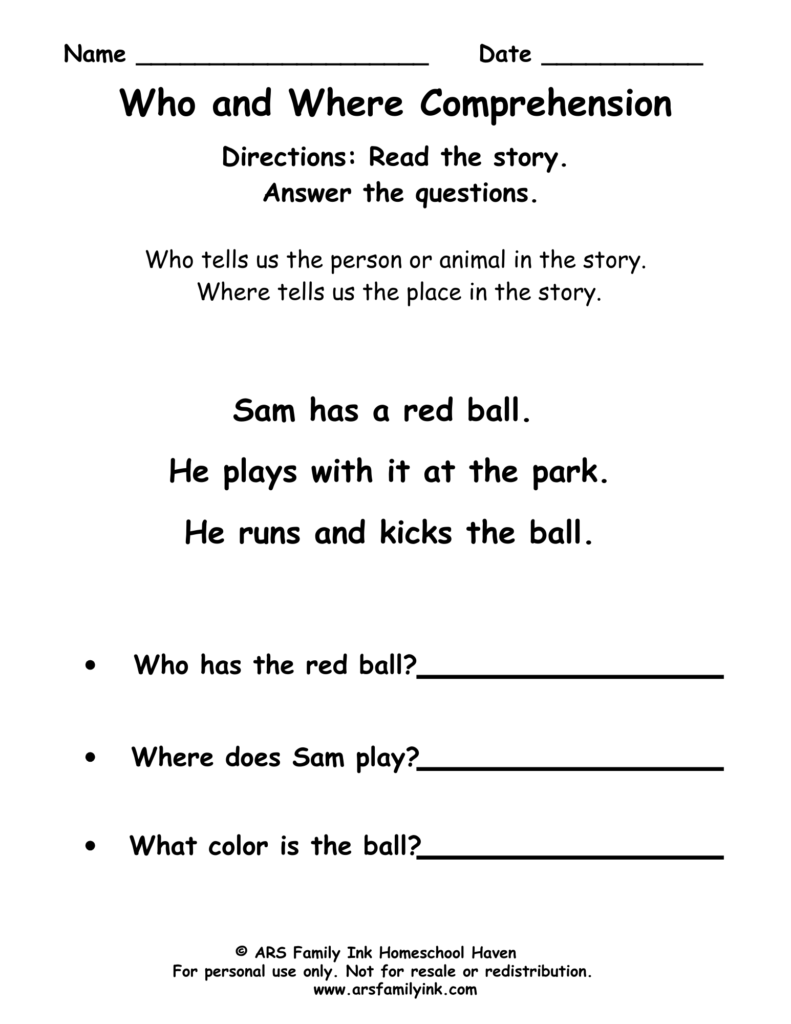
Worksheet 2
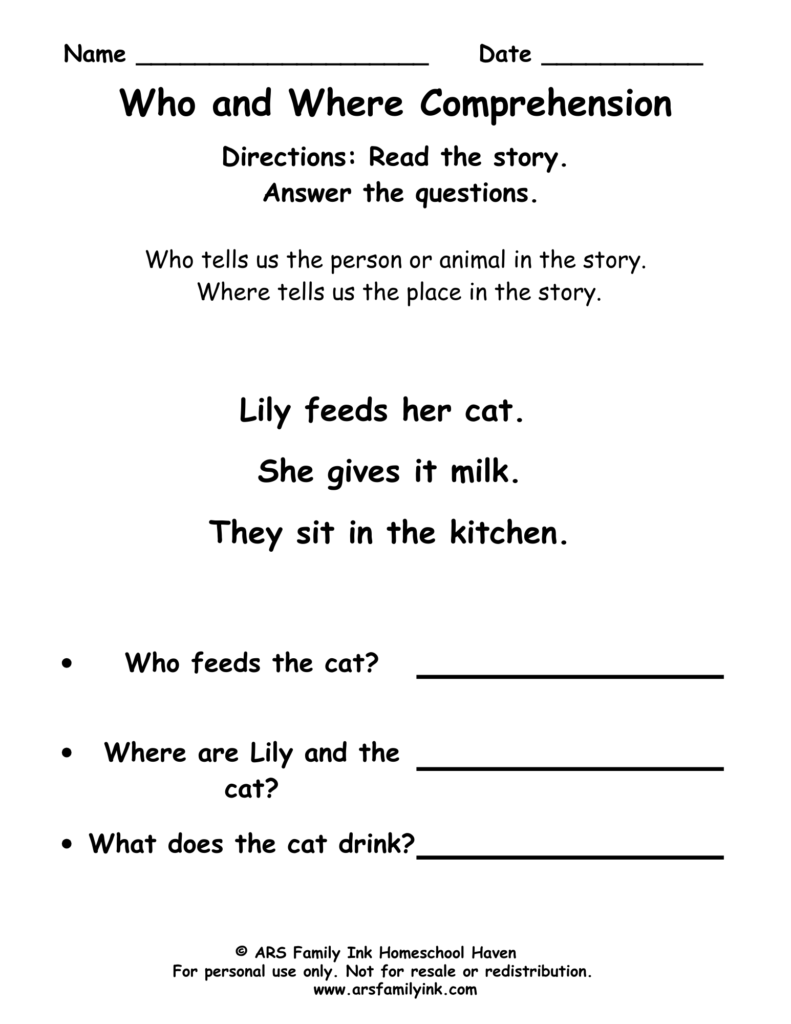
Worksheet 3
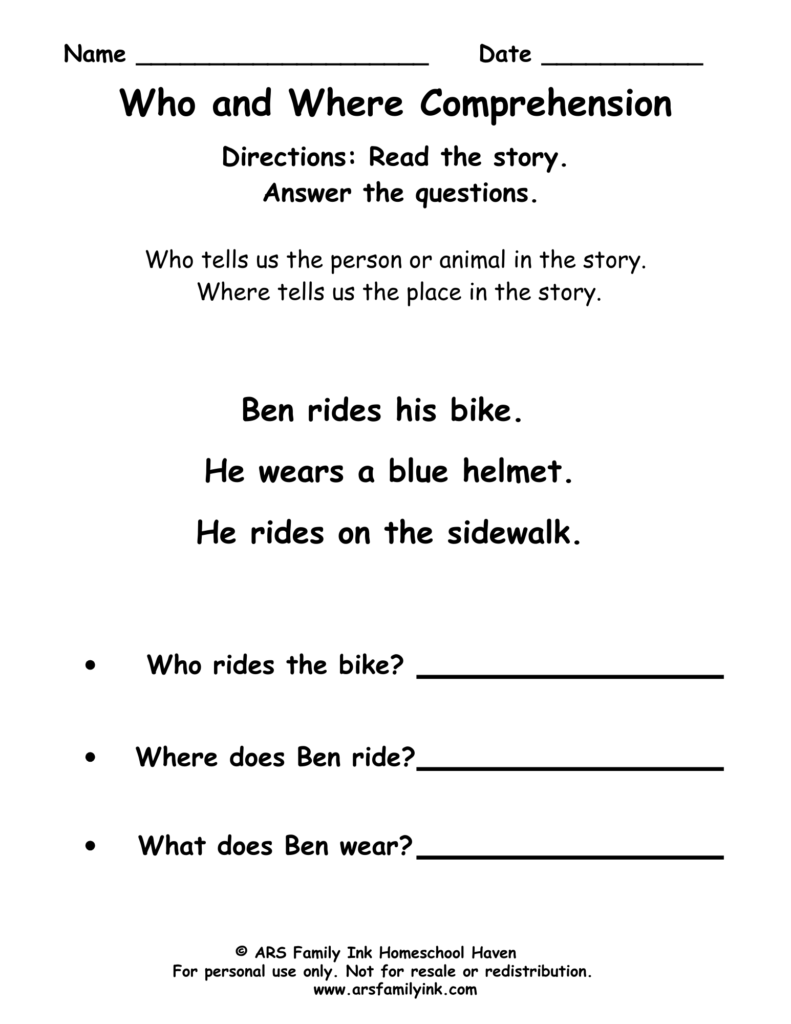
Worksheet 4
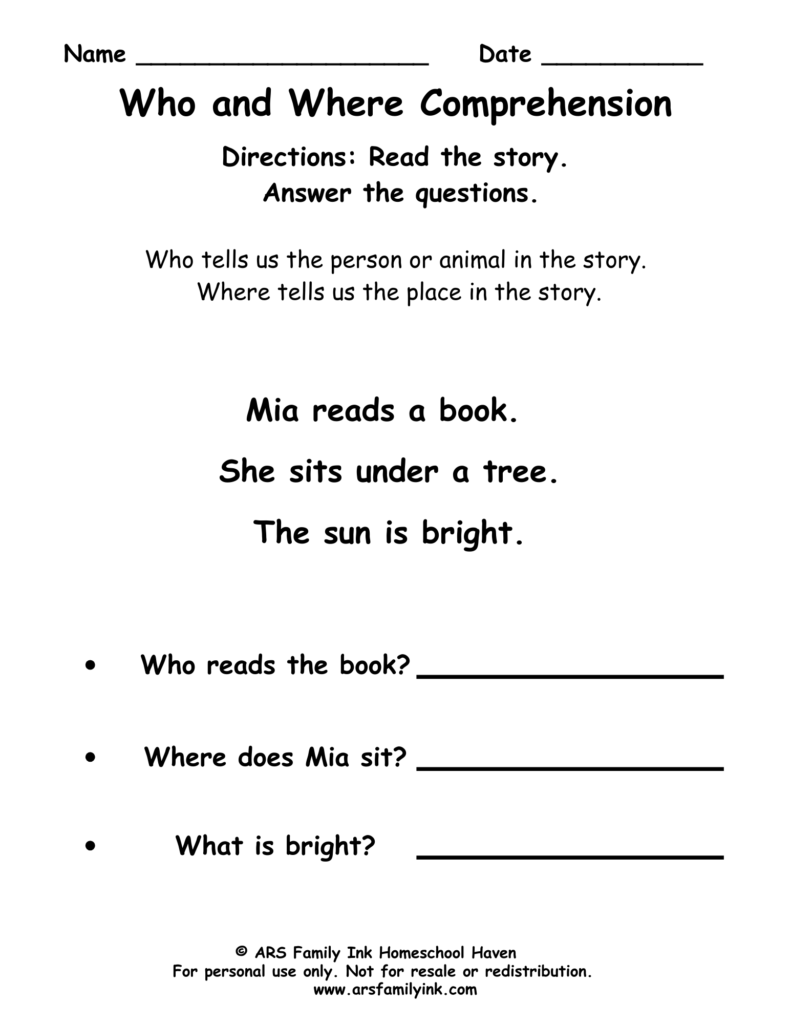
Worksheet 5
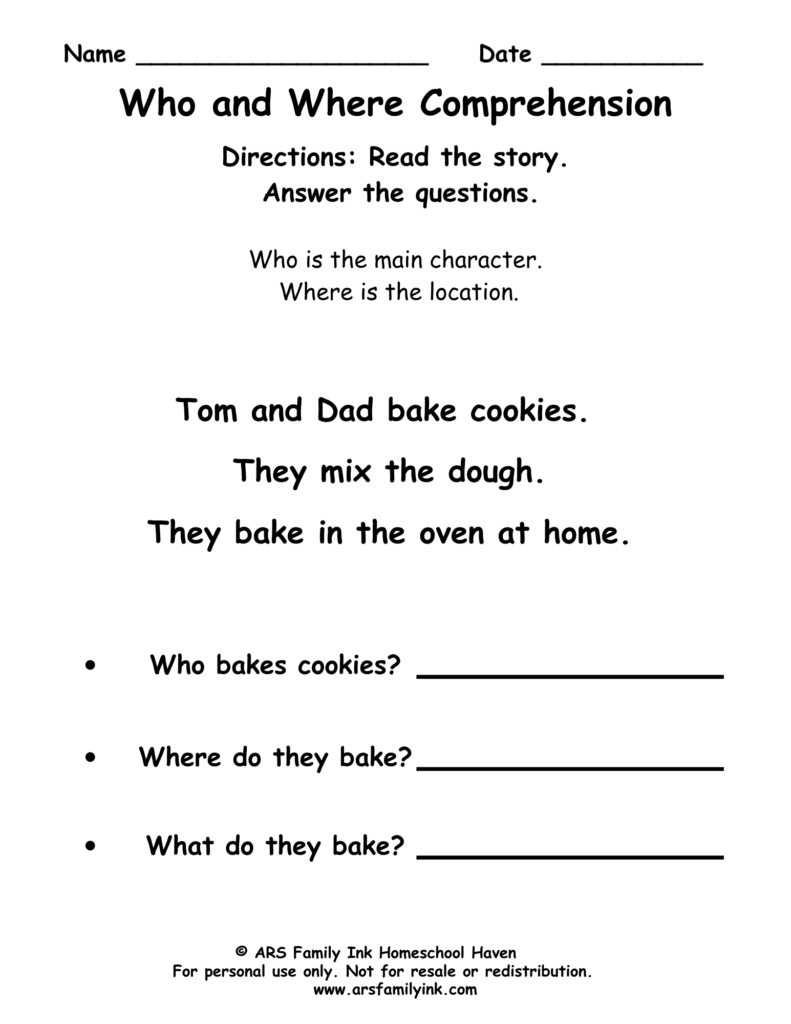
Worksheet 6
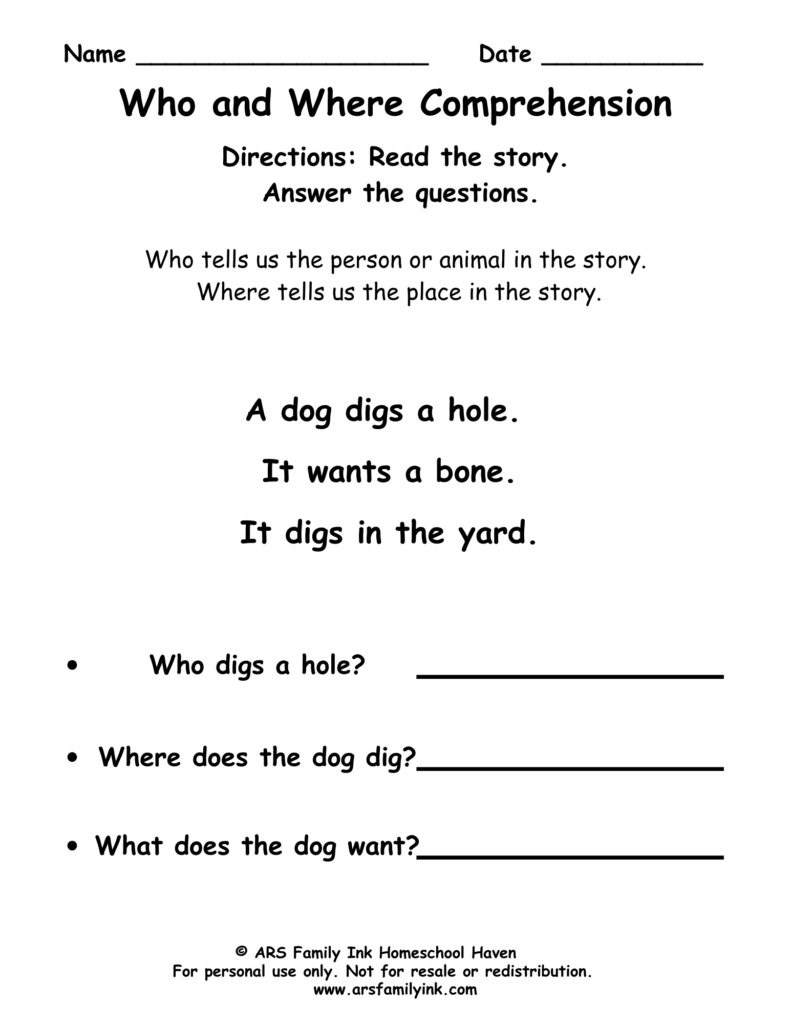
Worksheet 7
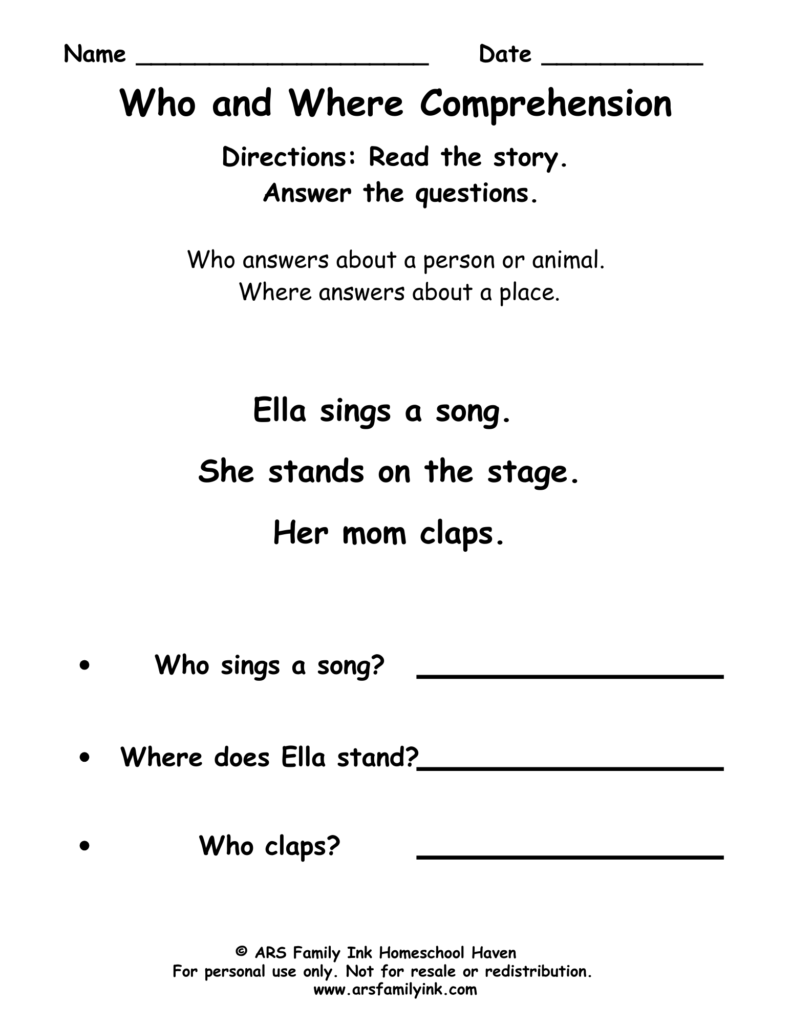
Worksheet 8
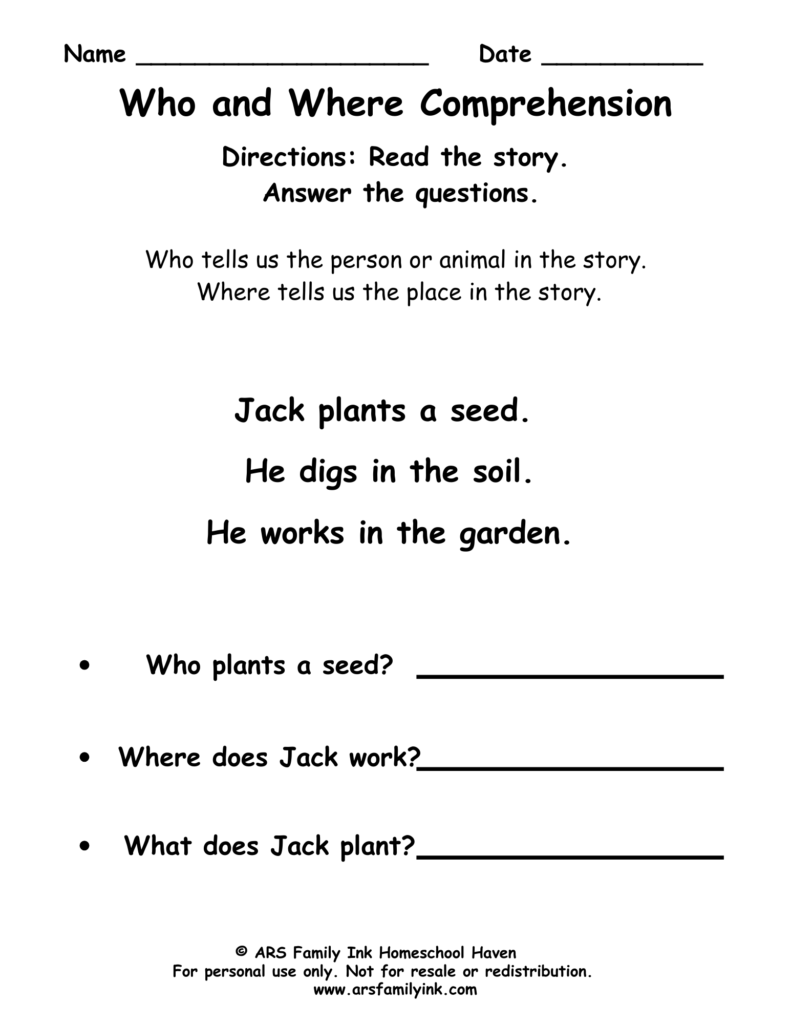
Worksheet 9
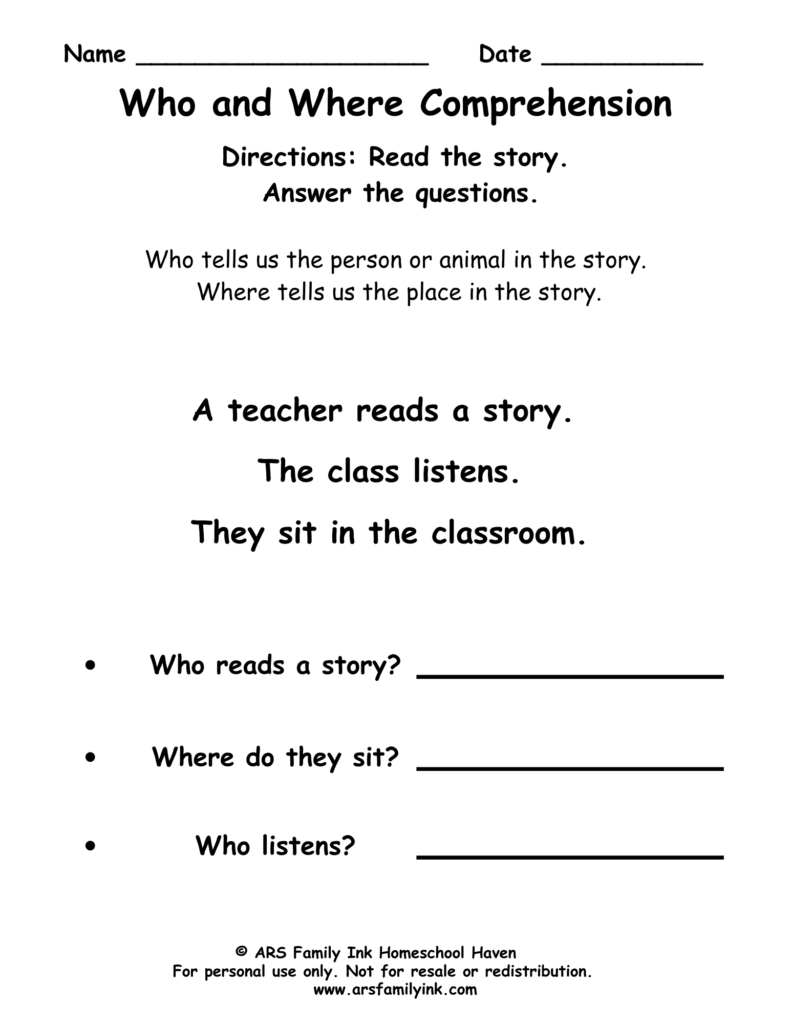
Worksheet 10
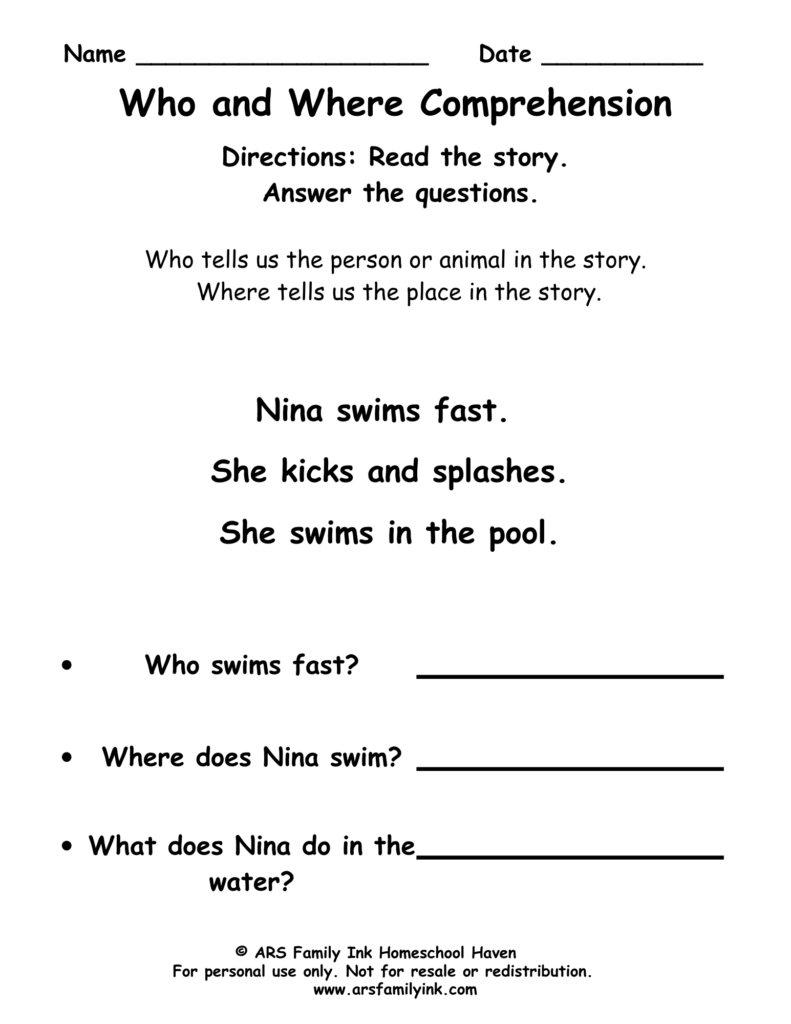
About These Count and Color Worksheets
These Who and Where Reading Comprehension Worksheets introduce young learners to an important part of reading: understanding and remembering what they read.
Each worksheet contains a brief passage written with simple sentences and familiar topics. After reading, children answer questions about the information presented in the text.
The activities place special emphasis on two important comprehension questions:
Who? helps children identify the person or animal in the passage.
Where? helps children identify the place or setting.
Children also answer an additional question about a specific detail from the passage. This encourages them to pay attention to the entire text rather than looking for only one type of information.
Skills Your Child Will Practice
These worksheets provide practice with several beginning reading and writing skills, including:
Reading short passages
Reading for meaning
Identifying who a passage is about
Identifying where events take place
Finding explicitly stated information
Recalling important details
Answering who, where, and what questions
Understanding basic story elements
Using information from a text to answer questions
Writing short answers
Building reading confidence
Developing early reading comprehension
The short passages allow beginning readers to concentrate on understanding the text without being overwhelmed by a long story.
Building Early Reading Comprehension
Learning to read involves more than correctly saying the words on a page. Children also need to understand what those words and sentences mean.
Simple questions such as who, where, and what teach children to pay attention to important information while they read. They begin learning that answers can often be found directly in the text.
This type of literal comprehension practice creates a foundation for later skills such as sequencing events, identifying characters and settings, retelling stories, determining main ideas, making predictions, and eventually making inferences from a text.
Learning Beyond the Worksheet
You can practice who and where questions with almost any book you read together.
After reading a story, try asking questions such as:
Who was the story about?
Where did the story happen?
What did the character do?
What happened first?
What happened next?
What was one important detail you remember?
You can also ask your child to show you the sentence or part of the story that helped them find the answer. This encourages children to return to the text and support their answers with information they have read.
Not Sure Where to Start?
Choose a worksheet with a passage your child can read with reasonable support.
For a kindergarten learner, you can begin by reading the passage together and discussing the answers aloud before your child writes them.
For a first grade learner, try allowing your child to read the passage independently first. If they have difficulty answering a question, encourage them to go back and reread the passage rather than immediately giving them the answer.
The goal is not to complete the worksheets as quickly as possible. Focus on helping your child understand how to find information in a text.
Frequently Asked Questions
What grade are these reading comprehension worksheets for?
These worksheets are designed for beginning readers and are appropriate for many kindergarten and first grade students. The amount of adult support needed will depend on the child’s individual reading ability.
What do these worksheets teach?
The worksheets primarily teach children to read or listen to a short passage and answer who, where, and other literal comprehension questions using information provided directly in the text.
Can I read the passage aloud to my kindergartener?
Yes. Reading the passage aloud can be appropriate for children who are still developing independent decoding skills. They can focus on listening comprehension and answering questions while their reading skills continue to develop.
Should first graders complete these independently?
Some first graders may be able to complete the worksheets independently, while others may still benefit from support. Choose the level of assistance based on the individual child’s reading development.
Why should children look back at the passage?
Returning to the passage teaches children that they do not have to rely only on memory. They can reread the text, locate important information, and use that information to answer a question.
Continue Learning
Continue exploring free Worksheets from ARS Family Ink Homeschool Haven.
Support Our Free Worksheets
If you enjoy these free worksheets, you can support our site by sharing with others, following us on social media, or joining our email list for more resources. It’s as easy as clicking the links at the bottom of the page. Your support helps us continue creating free printable learning materials.
