Preschool Visual Discrimination & Comparing Pictures Worksheets
Help your preschooler develop observation, comparison, and early sorting skills with our free Visual Discrimination & Comparing Pictures worksheets! This growing collection includes activities that encourage children to recognize similarities and differences, match identical pictures, identify shapes, compare sizes, and sort objects into groups.
Through simple, hands-on activities, preschoolers practice looking carefully, noticing important details, and explaining their choices. Whether children are finding a picture that does not belong, matching two pictures that are the same, or sorting shapes by different rules, these printable worksheets help build early math, classification, and problem-solving skills at a comfortable preschool pace.
How to Use These Worksheets
Begin by exploring the pictures and shapes with your child. Encourage them to name what they see and talk about how the pictures are alike or different. Depending on the worksheet, children may circle a matching picture, identify the picture that does not belong, or sort shapes and objects into groups.
For sorting activities, help your child identify the sorting rule, such as shape or size. Encourage them to explain why each item belongs in a particular group. Some activities allow children to sort the same pieces more than once using different rules.
Work at your child’s pace, offering gentle guidance or demonstrating an example when needed. The goal is to build confidence, careful observation, early reasoning, and an understanding that objects can be compared and organized in different ways.
Browse Our Visual Discrimination Worksheets
Explore our visual discrimination collection below. Select the worksheet preview to visit its individual page, where you can download the free printable PDF.
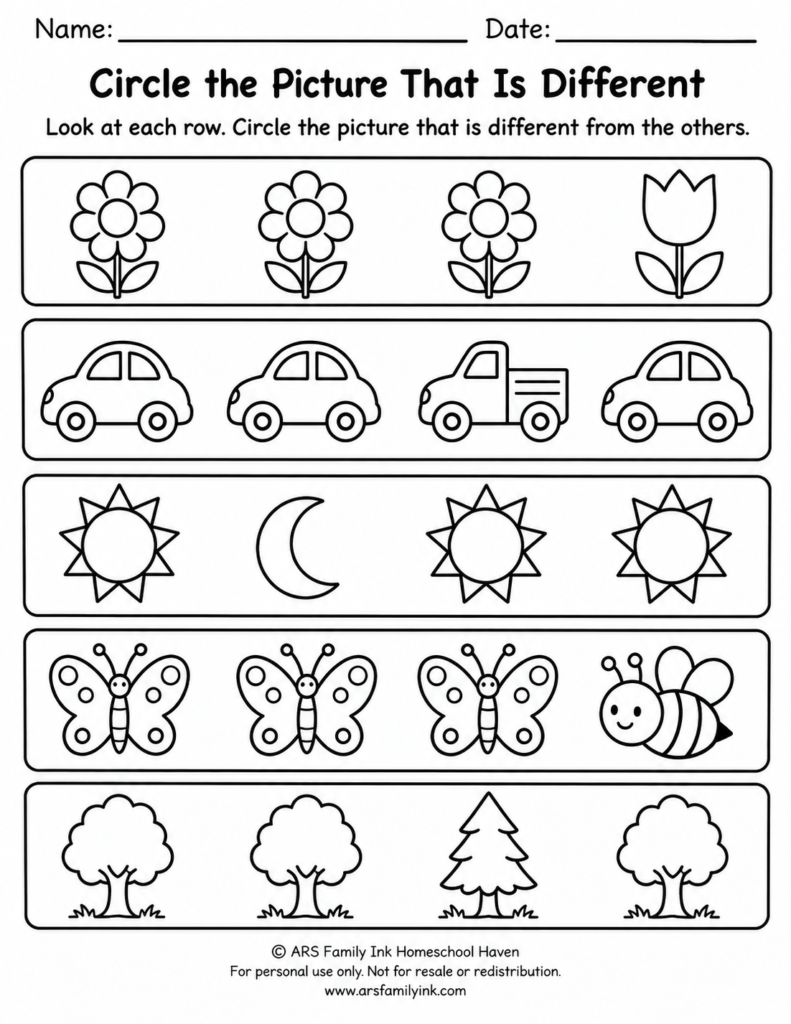
Circle the Picture that is Different
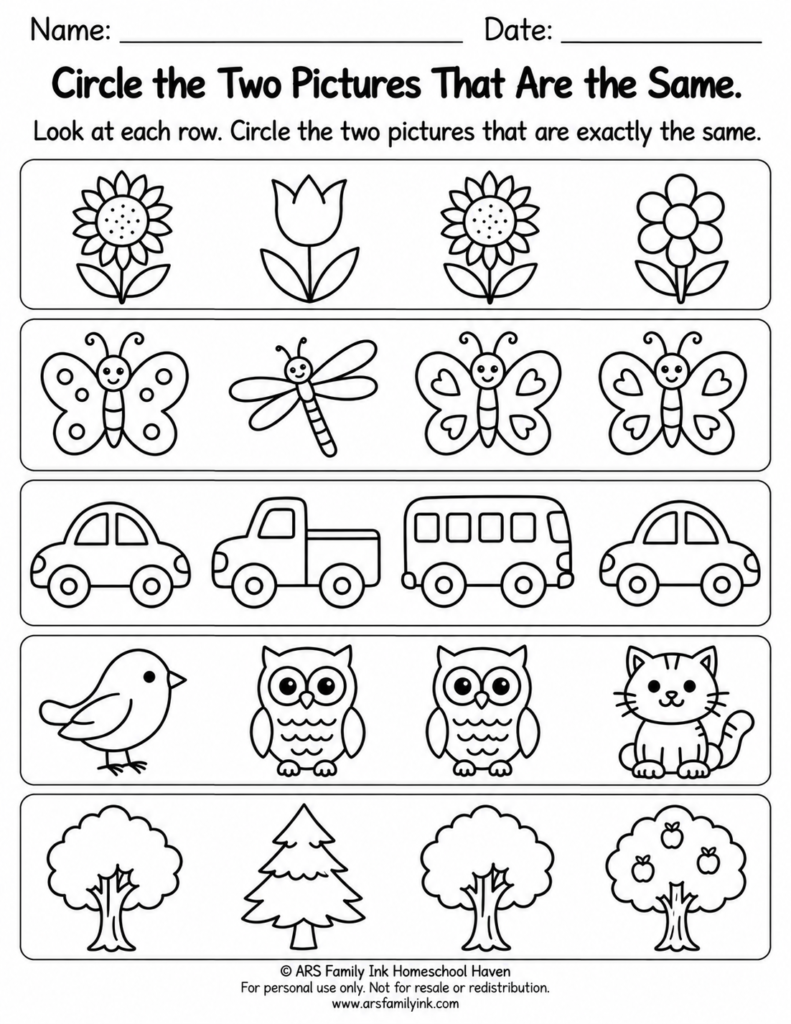
Circle the Two Pictures That Are the Same
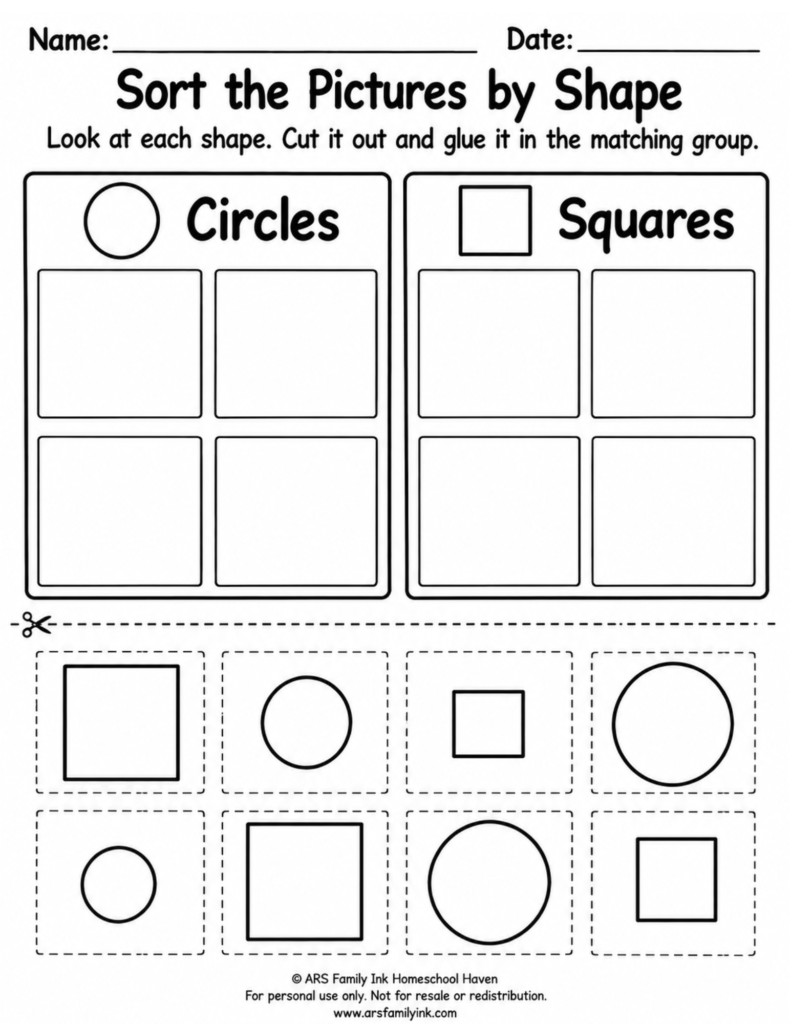
Sort the Pictures by Shape
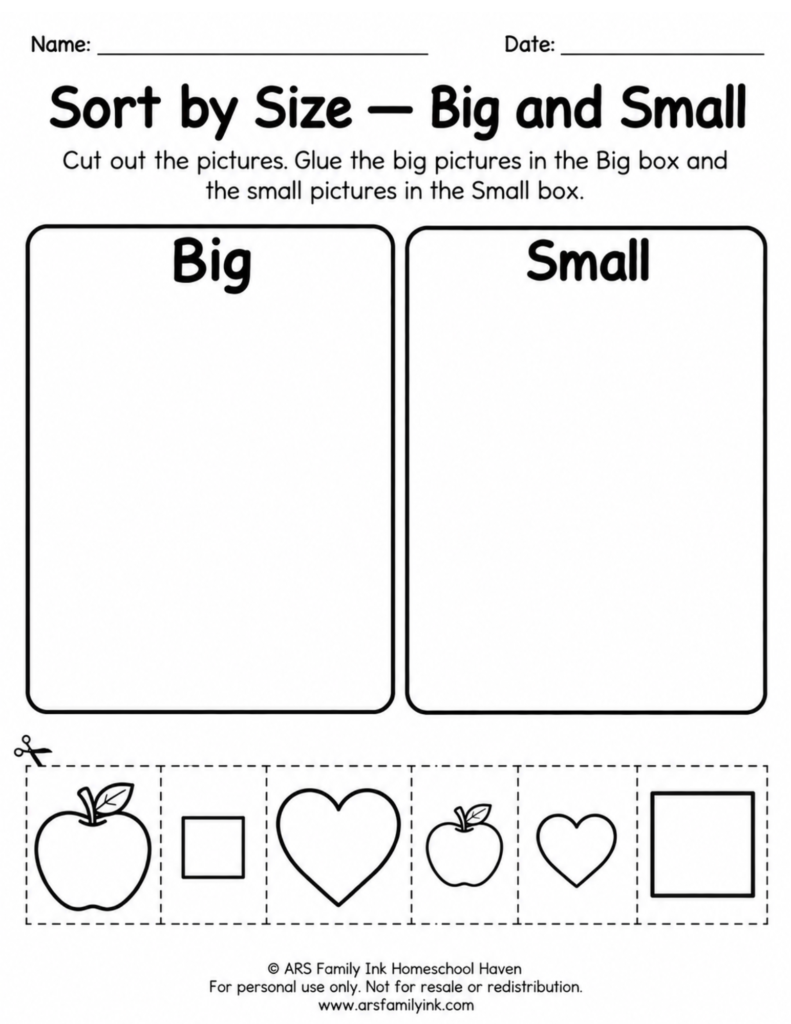
Sort by Size – Big and Small
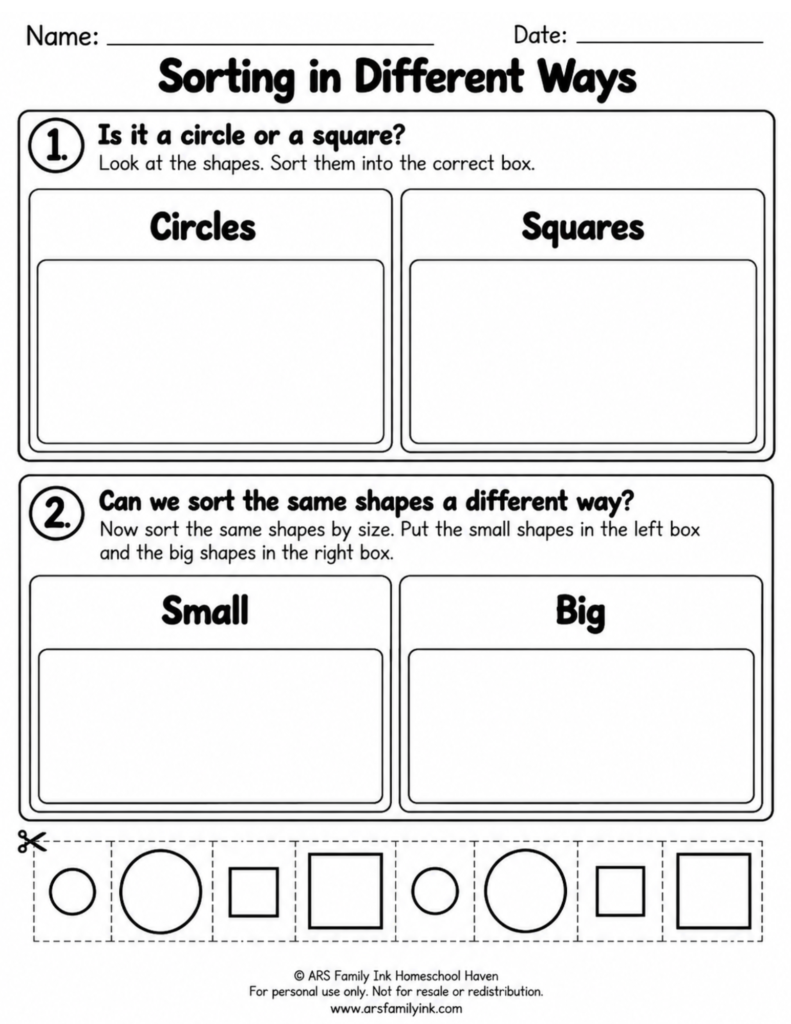
Sorting in Different Ways
About These Visual Discrimination Worksheets
Our free Preschool Visual Discrimination & Comparing Pictures Worksheets help young learners notice similarities, recognize differences, identify shapes, compare sizes, and organize objects into groups. Designed for preschool children ages 3–5, this growing collection introduces important early learning skills through simple, engaging activities.
Children can practice identifying pictures that are the same or different, sorting circles and squares, comparing big and small objects, and discovering that the same shapes can be sorted in more than one way. Each printable focuses on a specific skill while encouraging careful observation, hands-on exploration, and early problem-solving.
These worksheets are designed to complement playful, everyday learning experiences. Parents and teachers can provide guidance, demonstrate examples, and adjust activities to match each child’s developmental readiness.
Skills Your Child Will Practice
As children explore these preschool worksheets, they have opportunities to practice several important early learning skills:
Visual Discrimination: Notice similarities and differences between pictures, shapes, and objects.
Matching: Identify pictures or objects that look the same.
Shape Recognition: Recognize and distinguish familiar shapes, including circles and squares.
Size Comparison: Compare objects using descriptive words such as big and small.
Sorting and Classification: Group objects according to shared characteristics, including shape and size.
Flexible Thinking: Discover that the same objects can be organized using different sorting rules.
Observation and Attention: Look carefully at details before making decisions.
Early Reasoning: Explain why pictures match, differ, or belong in a particular group.
Fine Motor Coordination: Practice circling, handling, and positioning worksheet pieces when appropriate.
Children develop these skills at different rates. Activities can be simplified or extended according to individual readiness.
Why Visual Discrimination Matters
Visual discrimination is the ability to notice similarities and differences in what we see. It helps children recognize shapes, compare objects, identify matching pictures, and pay attention to important visual details.
These abilities support early learning in several areas. When children compare shapes and sizes, they begin developing mathematical concepts such as sorting, classification, and recognizing patterns. Careful observation also supports later letter and number recognition by helping children notice differences between visual symbols.
Sorting activities encourage children to think about how objects are alike and different. For example, a child may first group circles and squares separately, then discover that those same shapes can be organized into big and small groups. This introduces the idea that objects can share more than one characteristic.
Through playful practice, conversation, and hands-on exploration, children can strengthen observation, comparison, and early reasoning skills without pressure to master everything at once.
Learning Beyond the Worksheet
Visual discrimination, matching, and sorting skills can be practiced throughout the day using familiar household and classroom objects. Try these simple activities to extend the learning:
Sort Everyday Objects: Gather blocks, toy animals, or other safe objects and invite your child to sort them by color, shape, or size.
Find the Match: Place several pairs of familiar objects or picture cards on a table and encourage your child to find the matching pairs.
Big and Small Hunt: Look around the room for objects that are big or small. Talk about how their sizes compare.
Shape Search: Find circles, squares, and other familiar shapes around your home or classroom.
Change the Sorting Rule: Sort a collection of blocks by shape, mix them up, and sort them again by size or color.
Which One Is Different?: Display three similar objects and one different object. Ask your child which one does not belong and why.
Encourage children to explain their choices using simple sentences. These conversations help build vocabulary, reasoning, and confidence while making learning part of everyday play.
Not Sure Where to Start?
If your child is just beginning to explore visual discrimination and sorting, start with a simple activity that matches their interests and readiness.
Begin with Matching: Try Circle the Two Pictures That Are the Same to practice noticing identical pictures.
Explore Differences: Use Circle the Picture That Is Different to help your child identify which picture does not belong in a group.
Introduce Shape Sorting: Try Sort the Pictures by Shape to practice recognizing and grouping circles and squares.
Practice Size Comparison: Use Sort by Size — Big and Small to explore differences in size.
Try a New Sorting Challenge: Once your child is comfortable sorting by one characteristic, introduce Sorting in Different Ways. Children first sort circles and squares by shape, then use the same pieces to sort by size.
There is no required order or pace. Younger learners may benefit from adult demonstrations and fewer choices, while children who are ready for a challenge can explain their sorting decisions or create their own sorting rules.
Choose the activity that feels right for your child, celebrate their discoveries, and revisit favorite worksheets whenever additional practice would be helpful.
Continue Learning
After practicing visual discrimination, explore more free preschool learning resources.
Support Our Free Worksheets
If these free resources help your family, you can support ARS Family Ink Homeschool Haven by sharing the site or joining our email list for new printables and homeschool ideas.
