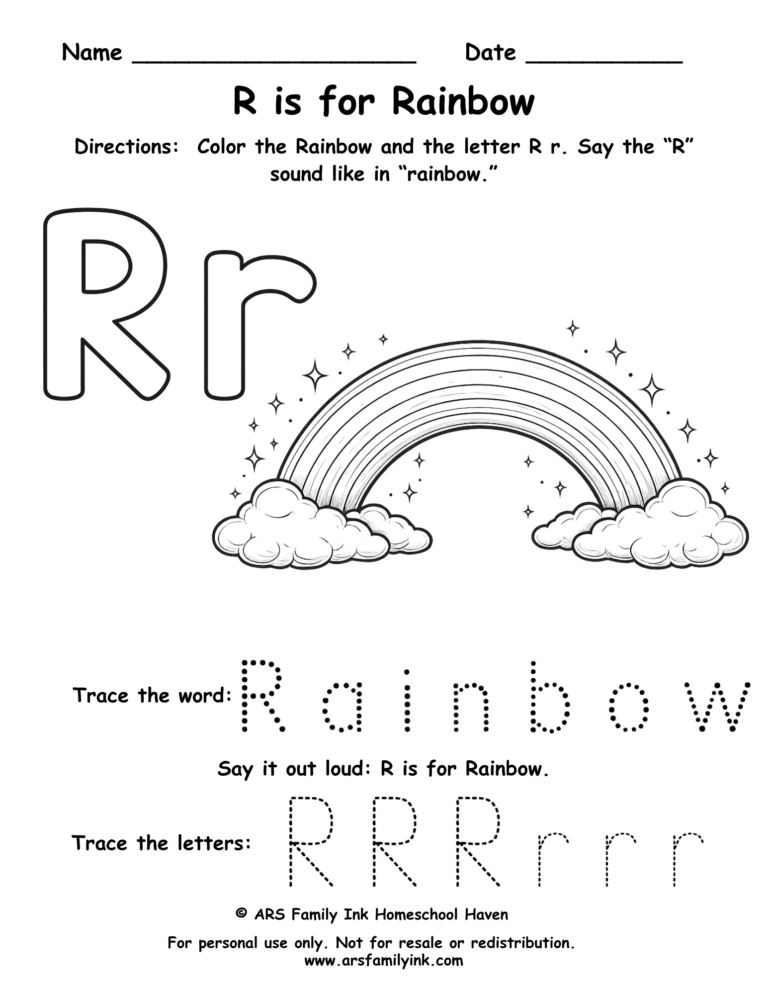
Download this free Letter V worksheet featuring “V is for Violin.” A fun preschool and kindergarten printable for practicing letter recognition, phonics, and tracing skills.
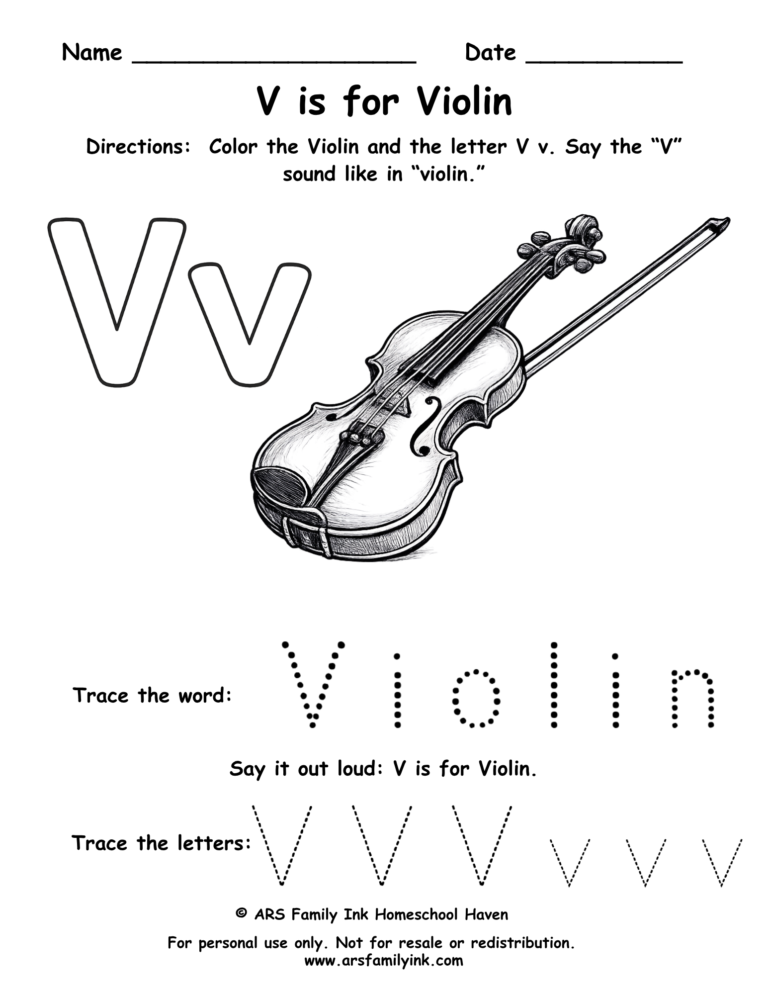
Download your free worksheet below:
Skills Covered:
Letter recognition
Letter formation
Beginning sounds
Fine motor skills
Why Learning the Letter V Matters
Learning the letter V helps children build important early reading and writing skills. As preschoolers practice tracing and recognizing the letter V, they begin connecting letters with sounds and strengthening alphabet knowledge.
Children practicing the letter V are strengthening:
Letter recognition
Beginning sound awareness
Fine motor development
Pencil control
Hand-eye coordination
Early reading readiness
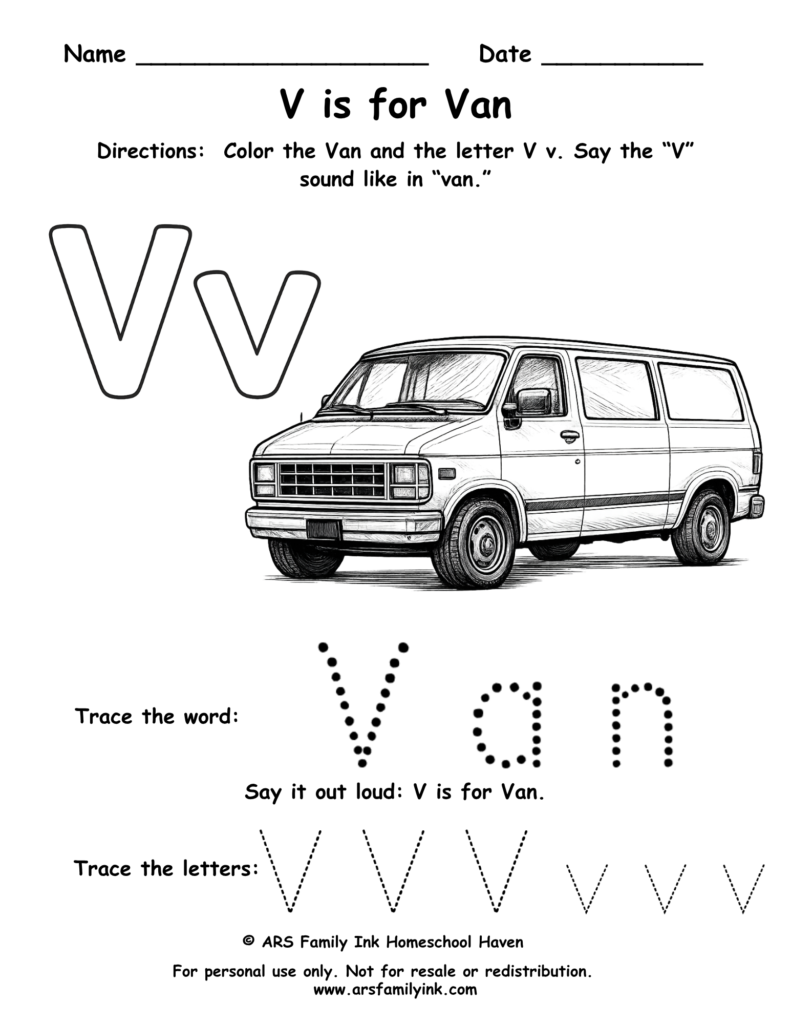
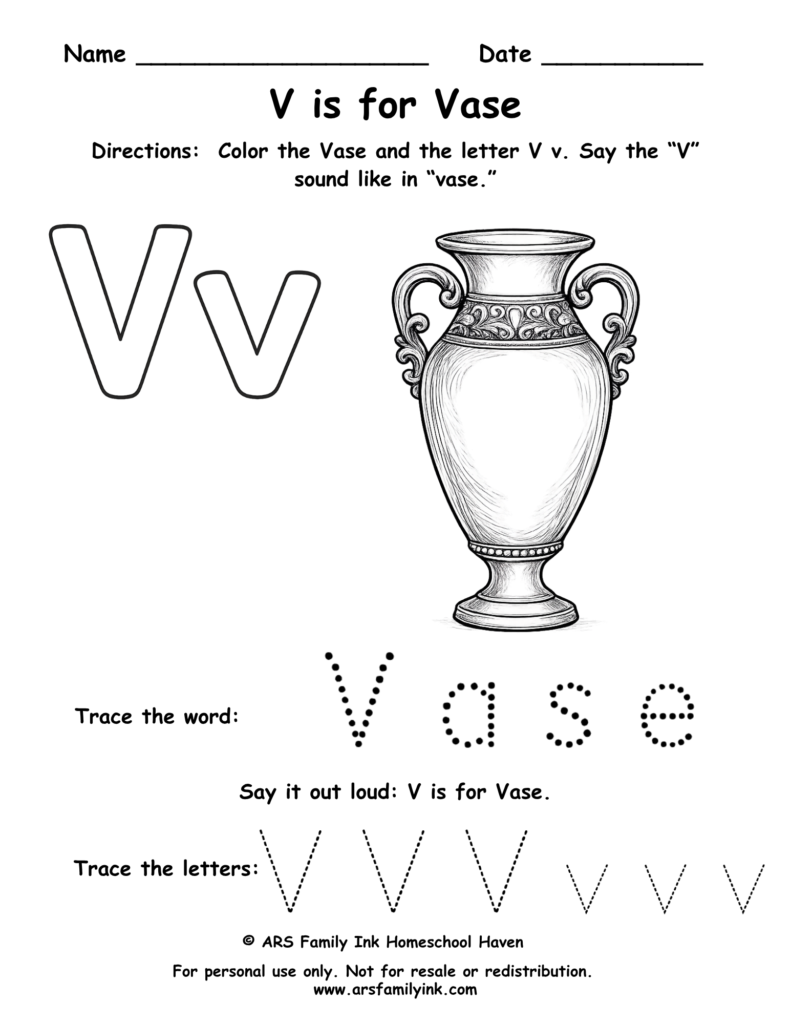
The word “violin” begins with the /v/ sound that children also hear in words such as van, vase, and volcano.
Parent and Teacher Tips
Say the letter name and sound aloud while your child traces.
Practice saying “V says /v/” together.
Point to uppercase V and lowercase v.
Talk about music and different instruments your child may have seen or heard.
Encourage effort rather than perfect handwriting.
Allow finger tracing before pencil tracing if needed.
Keep learning playful and positive.
Listen to violin music together and discuss how it sounds.
Questions to Ask Your Child
What letter are we learning today?
What sound does the letter V make?
What does a violin look like?
How do people play a violin?
What kinds of sounds can a violin make?
Can you think of another word that starts with V?
Fun Facts About Violins
Violins are string instruments played with a bow.
Violins usually have four strings.
The violin is one of the smallest and highest-pitched instruments in the string family.
Violins are often used in orchestras, bands, and solo performances.
People have been playing violins for hundreds of years.
Practice Beyond the Worksheet
Try these activities after completing the worksheet:
Draw and color a violin.
Build the letter V using playdough.
Listen to violin music together.
Read a music or instrument book together.
Look through books or magazines and circle the letter V.
Pretend to play a violin using a ruler or cardboard tube.
Sort instruments into string instruments and non-string instruments.
Related Concepts
After practicing the letter V, children can continue learning:
Beginning sounds
Alphabet recognition
Uppercase and lowercase letters
Music vocabulary
Sound and rhythm
Creative arts
Instrument families
Pre-writing skills
Fine motor development
More Letter Worksheets:
You may also like:
Science
Simple science concepts, observation skills, and early exploration.
Numbers & Math
Counting, number recognition, basic math skills, and early problem-solving.
Reading & Writing
Early reading comprehension, handwriting, and sentence building skills.
Support Our Free Worksheets
If you enjoy these free worksheets, you can support our site by sharing with others, following us on social media, or joining our email list for more resources. It’s as easy as clicking the links at the bottom of the page. Your support helps us continue creating free printable learning materials.