Understanding numbers means more than recognizing the symbol — children also need to understand the quantity each number represents. This free Count and Color Numbers 0–5 worksheet helps preschool and kindergarten learners practice counting objects, matching numbers to amounts, and understanding the concept of zero through a simple hands-on activity.
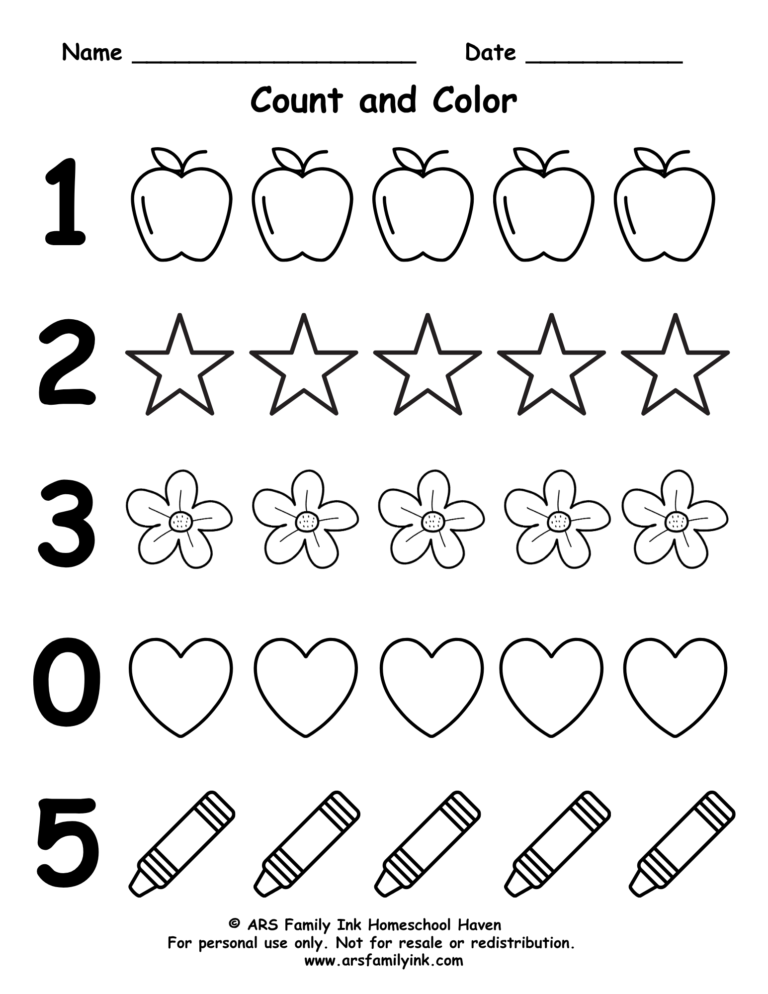
Download your free worksheet below:
What This Worksheet Teaches
This preschool math worksheet helps children practice:
• Recognizing numbers 0 through 5
• Counting objects carefully
• Matching numbers with quantities
• Understanding that zero means none
• Following directions
• Strengthening fine motor skills through coloring
How to Use This Worksheet
Step 1: Look at the number at the beginning of each row.
Step 2: Say the number aloud.
Step 3: Count the pictures beside the number.
Step 4: Color the matching number of objects.
Step 5: Check your answer by counting again.
Why Learning Numbers 0–5 Matters
Numbers 0 through 5 are some of the first math concepts children learn. These early numbers help build a foundation for counting, comparing amounts, addition, subtraction, and problem-solving.
This worksheet also introduces the important concept of zero. Understanding that zero represents “none” or “nothing” helps children develop stronger number sense and prepares them for future math lessons.
Learning Objectives:
After completing this worksheet, children will practice:
• Identifying numbers 0–5
• Counting groups of objects
• Understanding different quantities
• Recognizing zero as an amount
• Connecting numbers with real objects
• Building confidence with early math skills
Skills Practiced:
• Counting
• Number recognition
• One-to-one correspondence
• Quantity understanding
• Visual discrimination
• Fine motor development
• Hand-eye coordination
• Following instructions
Parent & Teacher Tips:
• Have children point to each object while counting.
• Practice saying the numbers aloud before coloring.
• Talk about why the zero row means no objects should be colored.
• Use toys or snacks to create matching groups.
• Encourage careful counting instead of guessing.
Practice Beyond the Worksheet:
Try these simple counting activities:
• Show zero fingers, then one, two, three, four, and five fingers.
• Count five crayons before coloring.
• Place objects into groups from 0–5.
• Ask children to bring you a certain number of toys.
• Practice finding numbers around your home.
Questions To Ask Children:
What number do you see?
How many objects should you color?
What does zero mean?
Which group has the most?
Which group has the least?
Related Concepts:
• Numbers 1–5
• Counting practice
• Number recognition
• Comparing quantities
• Beginning addition and subtraction
More Free Worksheets:
Understanding Zero and Early Counting
Learning zero is an important step in early math development. Children often learn to count objects before understanding that zero is also a number. Practicing with zero helps children understand empty groups, compare amounts, and prepare for subtraction concepts later.
Hands-On Counting Activity
Give your child five small objects, such as blocks, buttons, or crayons. Ask them to make groups showing zero, one, two, three, four, and five. This simple activity helps connect written numbers with real quantities.
Everyday Counting Practice
Numbers are everywhere in daily life. Children can practice counting toys, snacks, steps, books, or objects around the house. These everyday experiences help children see how math is useful outside of worksheets.
You may also like:
Science
Simple science concepts, observation skills, and early exploration.
Numbers & Math
Counting, number recognition, basic math skills, and early problem-solving.
Reading & Writing
Early reading comprehension, handwriting, and sentence building skills.
Support Our Free Worksheets
If you enjoy these free worksheets, you can support our site by sharing with others, following us on social media, or joining our email list for more resources. It’s as easy as clicking the links at the bottom of the page. Your support helps us continue creating free printable learning materials.