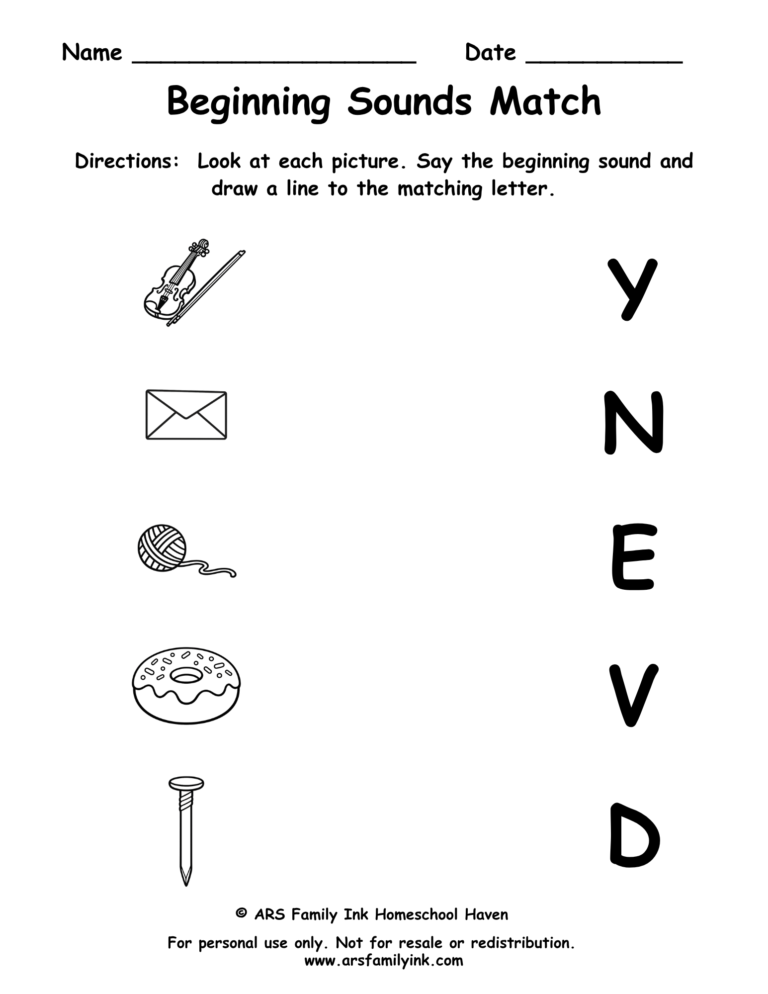
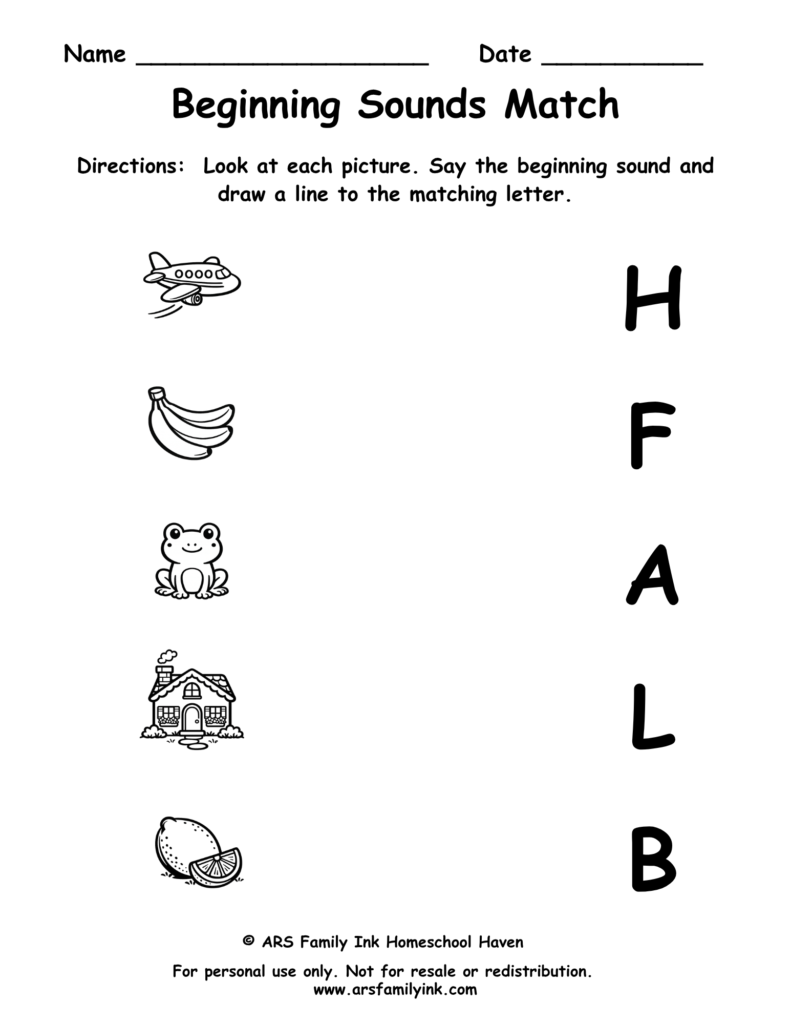
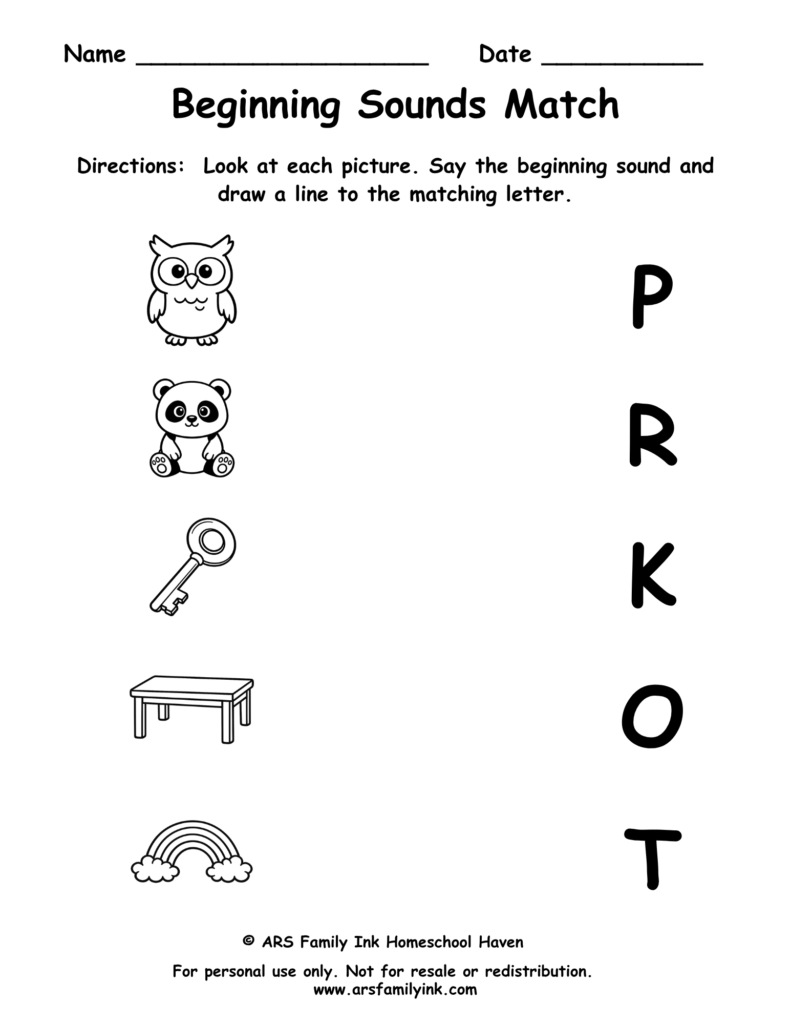
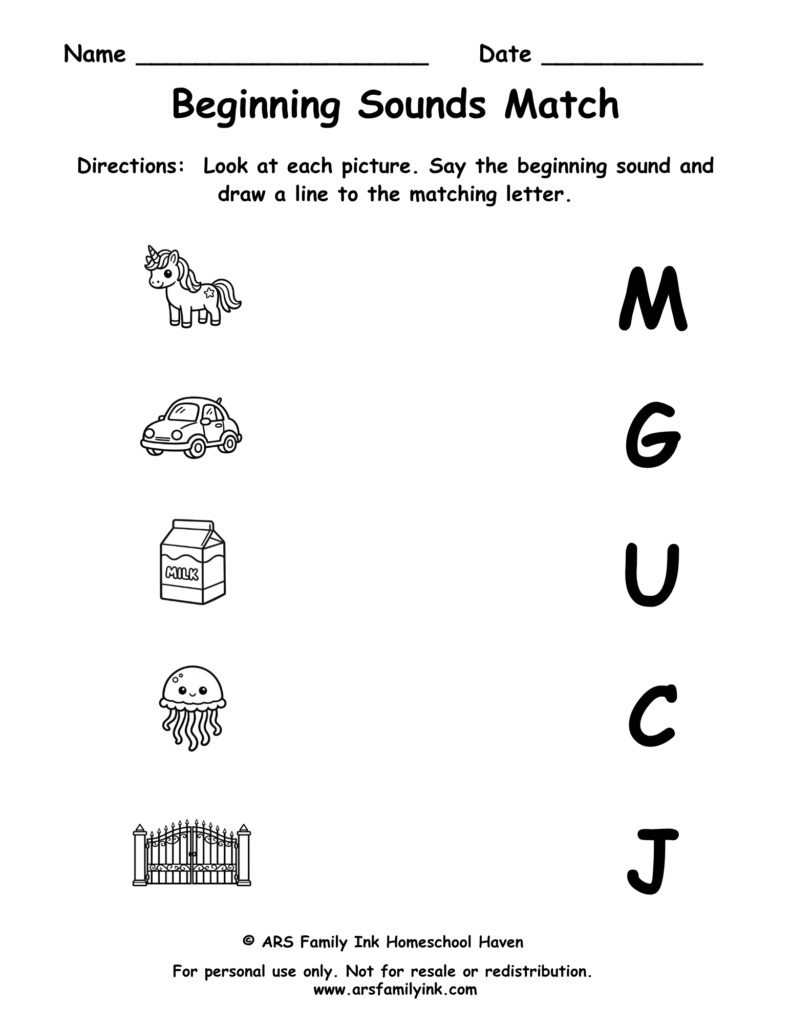
Help your preschool learner practice important early reading skills with this free Beginning Sounds Match worksheet. Children identify each picture, listen carefully for the first sound, and connect the picture to the matching letter.
This simple phonics activity supports alphabet knowledge, sound recognition, and early literacy development.
Download your free worksheet below:
What Children Will Practice
This worksheet helps children develop:
✔ Beginning sound identification
✔ Alphabet recognition
✔ Letter-sound matching
✔ Phonics awareness
✔ Vocabulary development
✔ Listening skills
✔ Pencil control
✔ Kindergarten readiness
How To Use This Worksheet
Look at each picture.
Say the word out loud.
Listen for the first sound.
Find the letter that makes the same sound.
Draw a line to match the picture and letter.
Why Beginning Sounds Are Important
Beginning sounds help children understand the connection between spoken words and printed letters. Recognizing the first sound in a word is an important step toward reading success.
Practicing these skills helps preschool learners build phonemic awareness, improve vocabulary, and gain confidence with letters and sounds.
Skills Covered
Beginning Sound Practice
Children learn to identify the first sound they hear in each word.
Letter Recognition
Students practice recognizing uppercase alphabet letters.
Letter-Sound Connections
Children connect letters with the sounds they represent.
Vocabulary Growth
Picture naming helps expand language and word understanding.
Fine Motor Skills
Drawing matching lines encourages pencil control and handwriting readiness.
Learning Goals
After finishing this worksheet, children should be able to:
✔ Hear beginning sounds in words
✔ Match letters with picture sounds
✔ Recognize uppercase letters
✔ Build phonics understanding
✔ Develop early reading confidence
Parent & Teacher Tips:
Extend the activity by:
• Saying each word slowly together.
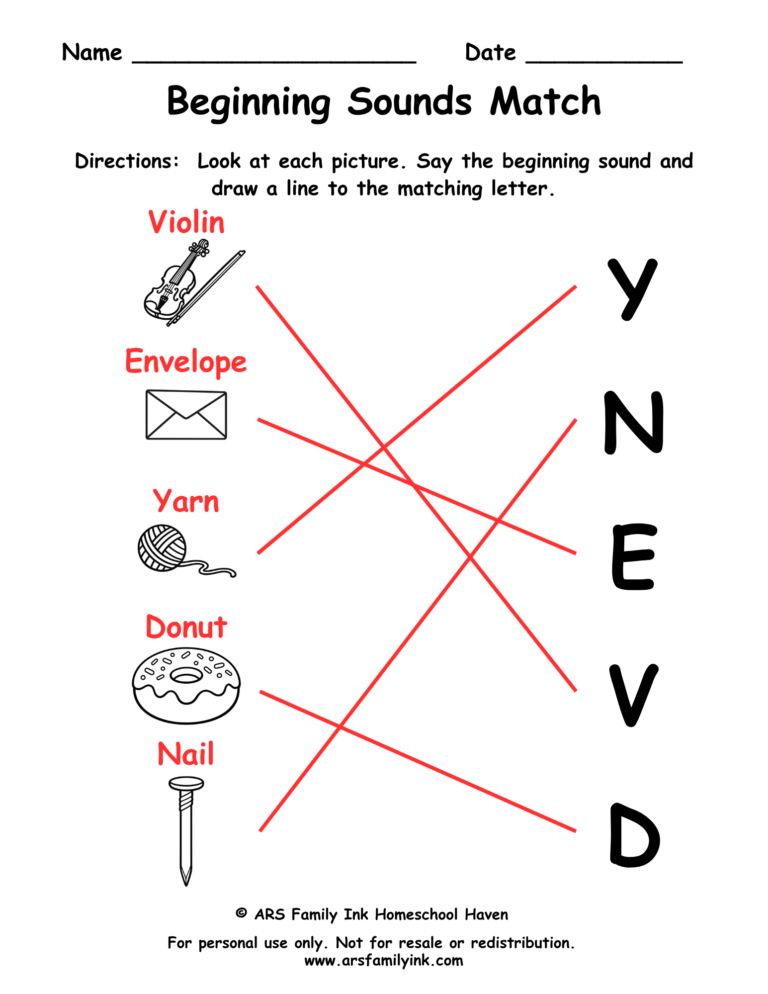
• Stretching the beginning sound: “V-V-Violin.”
• Finding other objects with the same beginning sound.
• Practicing writing each matching letter.
• Reviewing each answer aloud.
Extend the Learning
Beginning Sound Hunt
Search around the room for items that begin with V, E, Y, D, and N.
Letter Practice
Write uppercase and lowercase versions of each matching letter.
Sound Sorting
Group toys or picture cards by their beginning sounds.
Vocabulary Practice
Have your child make a sentence using each worksheet word.
Questions To Ask Children:
What picture do you see?
What sound do you hear at the beginning?
Which letter matches that sound?
Can you think of another word with the same beginning sound?
Which picture was easiest to match?
Answer Key
More Free Worksheets:
Building Early Literacy Skills
Beginning sound worksheets provide valuable practice for young learners as they discover how letters and sounds work together. These activities help children build the foundation needed for reading, spelling, and writing.
You may also like:
Science
Simple science concepts, observation skills, and early exploration.
Numbers & Math
Counting, number recognition, basic math skills, and early problem-solving.
Reading & Writing
Early reading comprehension, handwriting, and sentence building skills.
Support Our Free Worksheets
If you enjoy these free worksheets, you can support our site by sharing with others, following us on social media, or joining our email list for more resources. It’s as easy as clicking the links at the bottom of the page. Your support helps us continue creating free printable learning materials.